

Senior Senior Dental Care in St. Cloud, MN: Oral Health for Older Adults
As we age, our bodies experience a variety of physiological changes, and our oral health is no exception. Senior dental care requires a specialized approach that takes into consideration the cumulative effects of aging, systemic health conditions, prescription medications, and past dental restorations. At Centrasota Dental in St. Cloud, Minnesota, we provide expert, compassionate dental care tailored specifically for older adults.
Under the direction of Dr. Robert Congdon, a board-certified Prosthodontist, our practice is uniquely equipped to manage the complex restorative and preventive needs of seniors. We understand that maintaining a healthy, functional smile is critical not only for your appearance but for your overall health, nutrition, and quality of life. This comprehensive guide details the most critical aspects of senior dental care and how our team addresses the specific challenges faced by older adults.
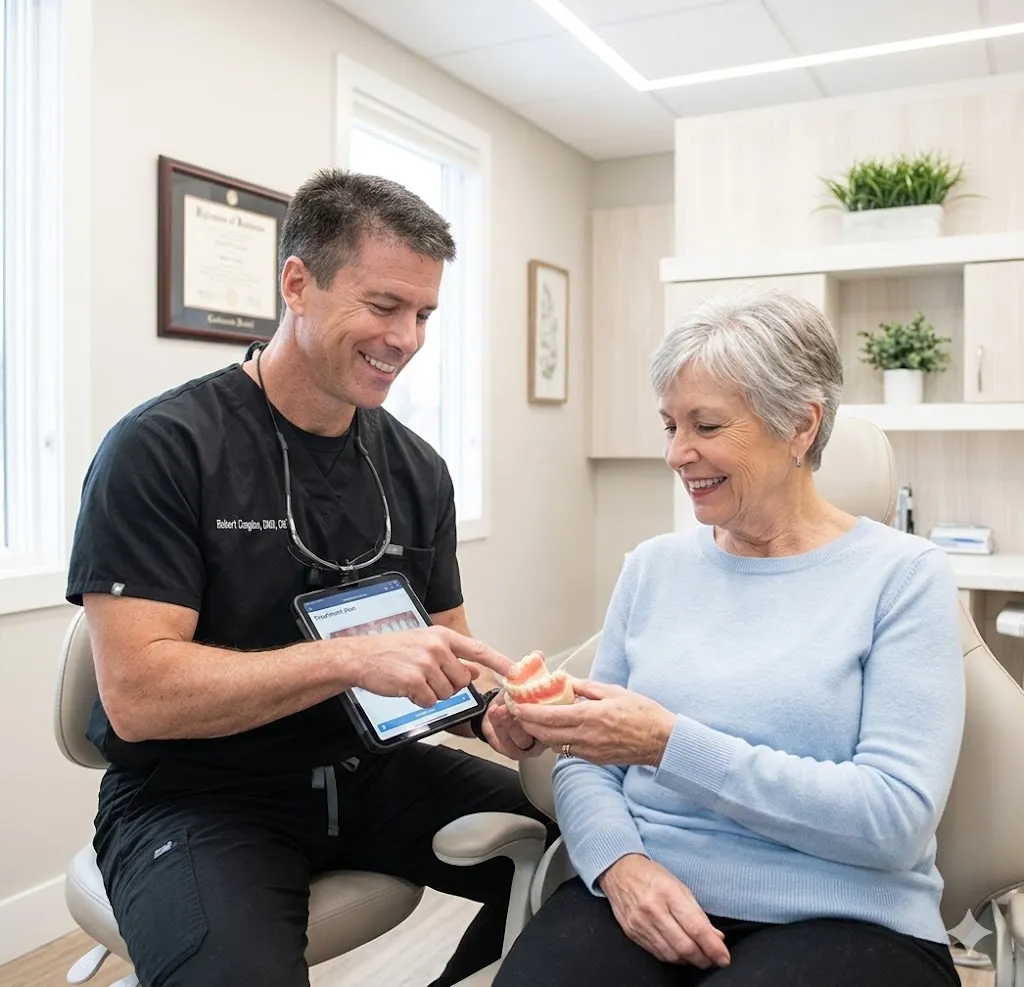
Managing Dry Mouth (Xerostomia)
Dry mouth, clinically known as xerostomia, is one of the most common and destructive oral health issues faced by seniors. Saliva is the mouth’s natural defense mechanism. It washes away food particles, neutralizes acids produced by plaque, and provides disease-fighting substances throughout the mouth. When saliva production decreases, the risk of rapid, widespread tooth decay and fungal infections (like oral thrush) increases significantly.
It is important to understand that dry mouth is not a normal part of the aging process. It is most frequently a side effect of prescription medications, which are more commonly taken by older adults. At Centrasota Dental, we actively screen for xerostomia. Treatment and management strategies include prescribing high-concentration fluoride toothpastes to strengthen enamel, recommending specific saliva-substitute mouth rinses, and establishing more frequent professional cleaning schedules to monitor for rapid decay. We also advise patients on hydration strategies and dietary modifications to stimulate natural saliva flow safely.
Comprehensive Denture Care and Maintenance
Many older adults rely on partial or full dentures to restore their chewing function and appearance. A common misconception is that once the natural teeth are gone, regular dental visits are no longer necessary. This is entirely false. Denture wearers require consistent professional care to ensure the health of their gums, jawbone, and the prosthetic itself.
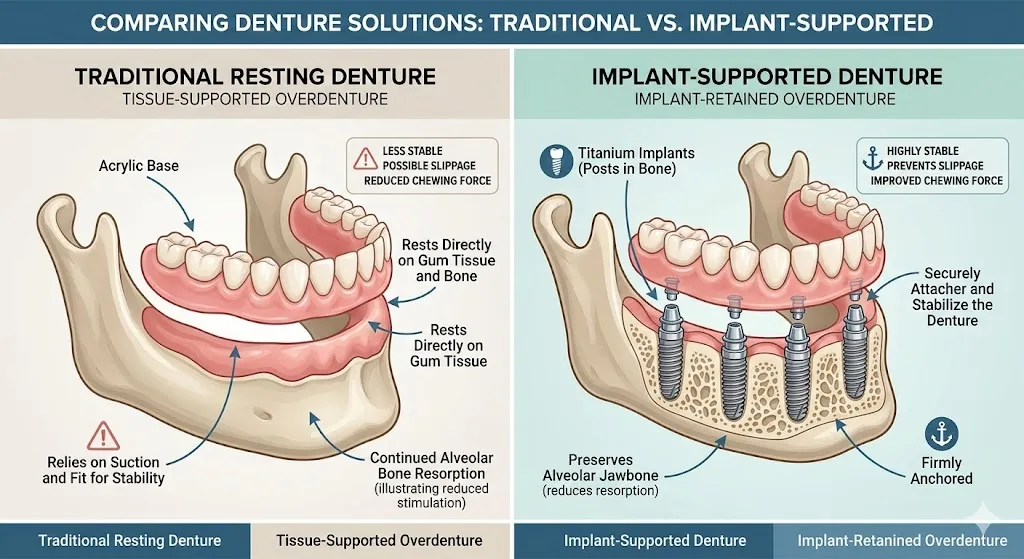
Over time, the jawbone naturally shrinks (resorbs) when natural tooth roots are no longer present to stimulate it. This changes the shape of your gums, meaning a denture that fit perfectly five years ago will eventually become loose and unstable. Ill-fitting dentures cause painful sores, difficulty speaking, and an inability to chew properly. Furthermore, porous denture materials can harbor harmful bacteria and fungi if not professionally cleaned and evaluated. We provide routine denture examinations, professional ultrasonic cleaning of the prosthetic, and essential relining services to adjust the fit of your dentures to the changing contours of your jaw.
Preventing and Treating Root Decay
As patients age, it is very common for the gum tissue to gradually pull back, or recede, from the crown of the tooth. This recession exposes the root of the tooth. Unlike the crown, which is protected by a hard layer of enamel, the tooth root is covered only by a much softer tissue called cementum.
Because cementum is highly porous and less mineralized, exposed roots are exceptionally vulnerable to decay, especially when compounded by dry mouth. Root decay can progress rapidly into the center of the tooth, leading to nerve infection and tooth loss. Preventive care for seniors must include aggressive monitoring of the gumline. Our clinical team utilizes targeted fluoride varnishes during hygiene visits to harden exposed roots. If root decay does occur, we use advanced composite bonding materials to restore the area, seal the root, and protect the structural integrity of the tooth.
Mitigating Oral Cancer Risks
The risk of developing oral cancer increases significantly with age. The majority of oral cancers are diagnosed in patients over the age of 55. This heightened risk is due to the cumulative effects of cellular changes over a lifetime, prolonged exposure to risk factors such as tobacco and alcohol use, and a naturally weakening immune system.
Early detection is the single most important factor in successfully treating oral cancer. Often, precancerous lesions or early-stage oral cancers do not cause any pain and can go unnoticed by the patient. During every routine examination at Centrasota Dental, Dr. Congdon and our hygienists perform a comprehensive oral cancer screening. We meticulously examine the tongue, lips, cheeks, palate, floor of the mouth, and throat tissues for any discoloration, lumps, or abnormal cellular changes.
Navigating Medications and Oral Health
Older adults frequently manage multiple systemic health conditions with a variety of prescription and over-the-counter medications. It is critical to communicate your complete medication list to your dental team, as these drugs can profoundly impact your oral health and influence how we deliver dental care.
Beyond causing dry mouth, certain medications can cause the gum tissue to overgrow (gingival hyperplasia), making it difficult to keep teeth clean. Blood thinners and anticoagulants, commonly prescribed for cardiovascular conditions, affect how your blood clots, which dictates how we approach extractions or surgical procedures like implant placement. Medications for osteoporosis (bisphosphonates) can alter bone healing in the jaw. By maintaining an accurate, updated medical history, we can safely tailor our treatment protocols, coordinate with your primary care physician when necessary, and prevent adverse drug interactions.
Overcoming Mobility and Dexterity Challenges
Arthritis, Parkinson’s disease, neuropathy, and the general loss of fine motor skills can make routine oral hygiene at home incredibly difficult. When a patient cannot properly grip a toothbrush or manipulate dental floss, plaque rapidly accumulates, leading to accelerated decay and periodontal disease.
At Centrasota Dental, we provide practical, adaptive solutions for seniors facing dexterity challenges. We educate patients and their caregivers on the use of electric toothbrushes with larger, ergonomic handles that do the brushing work for you. We often recommend water flossers (oral irrigators) as a highly effective, easy-to-use alternative to traditional string floss. Additionally, our St. Cloud office is fully wheelchair accessible, and our clinical team is trained to safely and comfortably accommodate patients with limited mobility during their appointments.
Dental Implants for Seniors
A frequent question we receive from older adults is, “Am I too old for dental implants?” The answer is usually no. Age itself is not a contraindication for dental implant surgery; the determining factor is the health and density of the jawbone and the patient’s overall ability to heal.
Dental implants represent the standard of care for replacing missing teeth because they are the only restorative option that preserves the jawbone. When an implant is placed, it acts as an artificial tooth root, stimulating the bone and preventing the facial collapse that accompanies long-term tooth loss. For seniors struggling with loose, uncomfortable dentures, implant-supported dentures (often called snap-on dentures) provide life-changing stability. By anchoring the denture to just a few implants, patients regain the ability to eat a varied diet, speak clearly, and smile without the fear of their teeth slipping. As a Prosthodontist, Dr. Congdon specializes in designing these complex implant restorations.
The Oral-Systemic Link and Heart Health
Extensive medical research has established a definitive link between periodontal (gum) disease and systemic health issues, particularly cardiovascular disease. This is known as the oral-systemic connection.
The mouth serves as a primary entry point into the body. When a patient has advanced gum disease, the gums are essentially an open, bleeding wound. The aggressive bacteria responsible for periodontal infections can easily enter the bloodstream through these inflamed tissues. Once in the vascular system, this bacteria can attach to fatty plaques in the blood vessels, contributing to arterial blockages, hypertension, and an increased risk of heart attacks and strokes. For seniors, maintaining immaculate gum health is not just about keeping their teeth; it is a critical component of cardiovascular disease prevention and overall longevity.
Nutrition and Dental Function
Proper nutrition is vital for the health and immune function of older adults. However, a patient’s diet is directly dictated by the health and function of their teeth. When seniors suffer from missing teeth, severe decay, or ill-fitting dentures, chewing becomes difficult and painful.
Consequently, many older adults subconsciously alter their diets, avoiding nutrient-dense, fiber-rich foods like raw vegetables, fruits, and lean proteins because they are too difficult to chew. They default to a “soft diet” consisting of highly processed, carbohydrate-heavy foods. This shift can lead to malnutrition, weight loss, and a weakened immune system. By restoring a patient’s bite through advanced prosthodontics—whether with well-fitting crowns, bridges, or implant-supported prosthetics—we restore their ability to eat a balanced, healthy diet.
Guidance for Caregivers
Adult children and professional caregivers play a crucial role in maintaining the oral health of seniors, especially those experiencing cognitive decline, such as Alzheimer’s disease or dementia. These patients often lose the ability to perform daily hygiene tasks or communicate that they are in dental pain.
We partner with caregivers to ensure our senior patients remain comfortable and infection-free. We advise caregivers to watch for non-verbal signs of dental pain, such as wincing while eating, refusal to eat certain foods, pulling at the face, or sudden changes in behavior. Chronic bad breath or noticeable swelling are also indicators of an underlying infection. We provide hands-on training for caregivers on how to assist with daily brushing and flossing safely. Most importantly, we emphasize the need for regular professional examinations so that our clinical team can monitor the patient’s health and intervene before severe pain or systemic infection occurs.