

Bone Grafting & Sinus Lifts in St. Cloud
Building the Foundation for Your Permanent Smile
Dental bone grafting is a specialized surgical procedure used to rebuild or “bulk up” the jawbone when it has become too thin or soft to support dental implants. Since a successful implant requires a solid foundation to “anchor” into, grafting ensures that your restoration remains stable and functional for a lifetime. At Centrasota Dental, we utilize 3D digital mapping and the advanced restorative expertise of a Prosthodontist to perform precision grafting and sinus lift procedures that make dental implants possible for almost every patient.
Why is Bone Grafting Needed?
Bone is a “use it or lose it” tissue. When you lose a tooth, the surrounding jawbone stops receiving stimulation from chewing and begins to resorbe (melt away). Within just 12 months of tooth loss, the jaw can lose up to 25% of its volume. Bone grafting reverses this process by placing regenerative material into the deficient area, triggering your body to grow new, healthy bone.
Socket Preservation
Socket preservation is a proactive type of bone graft performed immediately after a tooth extraction. By filling the empty socket with grafting material right away, we prevent the “collapse” of the surrounding bone and gum tissue. This preservation technique saves you time and money by ensuring the site is ready for a dental implant just a few months later, without the need for more invasive rebuilding.
Sinus Lifts (Sinus Augmentations)
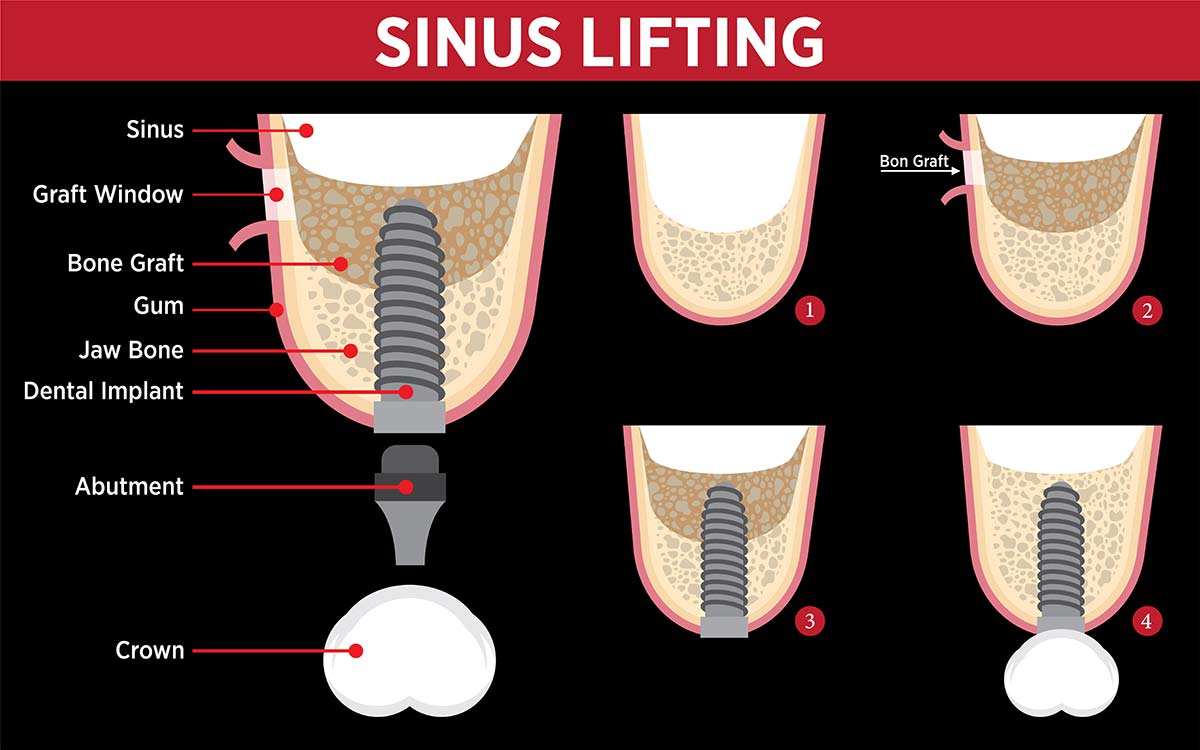
When replacing back teeth in the upper jaw, we often encounter the maxillary sinuses—air-filled cavities located just above your molars. If the bone between your mouth and sinus is too thin, an implant could accidentally penetrate the sinus membrane. A sinus lift involves gently “lifting” this membrane and placing bone graft material underneath it, creating the necessary height to safely house a dental implant.
Ridge Augmentation
If you have been missing teeth for many years, your alveolar ridge (the bone that used to hold your teeth) may have become too narrow. Ridge augmentation is a more extensive procedure where we increase the width or height of the jawbone. This restores the natural contour of your jaw, which not only supports implants but also prevents the “sunken” facial appearance associated with long-term tooth loss.
Material Sources: Where Does the Bone Come From?
Modern grafting is highly safe and utilizes several types of biocompatible materials:
- Autograft: Bone taken from your own body (typically the chin or jaw).
- Allograft: Processed human donor bone from a certified tissue bank.
- Xenograft: Processed bone from an animal source (usually bovine/cow).
- Synthetic: Mineral-based materials like calcium phosphate that act as a scaffold.
- Growth Factors: We may use specialized proteins (BMPs) to accelerate your body’s natural ability to produce new bone cells.
Bone Grafting Recovery Overview
| Stage | Healing Process | Activity Level |
| Days 1–3 | Minor swelling and tenderness | Rest and soft foods only |
| Days 4–7 | Swelling peaks and begins to fade | Return to light daily activities |
| Weeks 2–4 | Gum tissue fully closes | Resume normal diet (avoiding graft site) |
| Months 3–6 | Osseointegration (Bone fuses) | Full strength; ready for implant placement |
Pain Management & 7. Healing Time
We prioritize a comfortable experience. Most patients describe bone grafting as being less painful than the tooth extraction itself. We utilize local anesthesia and offer sedation options to ensure you feel nothing during the procedure. Healing for a minor graft takes 3 months, while a major ridge augmentation or sinus lift may require 6 to 9 months of healing before we can safely place the final dental implant.
Grafting for Implants vs. 9. Grafting for Dentures
While grafting is most common for implants, it is also used for denture patients. A ridge augmentation can provide a more stable, comfortable “platform” for a traditional denture, preventing the rubbing and soreness caused by a thin, sharp jawbone. However, for those seeking maximum stability, grafting for an implant-supported bridge or All-on-4 is the gold standard.
Cost of Bone Grafting in MN
The cost of a bone graft in Minnesota typically ranges from $600 to $3,000 depending on the material used and the size of the area being treated. A sinus lift typically ranges from $1,500 to $5,000. We provide a complete, transparent fee breakdown during your 3D consultation and discuss how this investment prevents the need for future restorative repairs.
Bone Grafting & Sinus Lift FAQ
Does the procedure hurt?
No. You will be completely numbed with local anesthesia, and we offer IV sedation for those who prefer to “sleep” through the visit. Afterward, any discomfort is usually managed with standard over-the-counter pain relievers like Ibuprofen.
Can I get an immediate implant with a bone graft?
In cases where there is still enough “native” bone to stabilize an implant, we can perform the graft and place the implant in the same visit. Dr. Congdon will determine if you qualify for this “same-day” approach using our 3D CT scan.
What is the danger of a "Dry Socket"?
Dry socket is a risk after extraction, not the graft itself. In fact, placing a bone graft into a socket (socket preservation) actually helps protect the blood clot and significantly reduces the risk of developing a painful dry socket.
What if the bone graft fails?
Graft failure is rare (less than 5%) and is usually caused by infection or smoking. If a graft does not integrate, we can usually remove the material, treat the area, and re-graft with a very high success rate on the second attempt.
Is bone grafting covered by insurance?
Many dental insurance plans cover bone grafting if it is “medically necessary” for a bridge or denture, though some exclude it if it’s strictly for an implant. Our team will perform a benefit check and provide you with an estimate of your out-of-pocket costs.
Why did I lose bone in the first place?
Bone loss is primarily caused by tooth loss, advanced gum disease (periodontitis), or facial trauma. Once the tooth is gone, the body “reclaims” the minerals from the jawbone because they are no longer being used to support a root.
Do I really need sedation?
While not required for minor grafts, many patients choose light or deep sedation for sinus lifts or multi-site grafting to ensure a completely stress-free experience. We will discuss your comfort preferences during your planning visit.
Schedule Your 3D Foundation Consult
Don’t let “thin bone” stop you from getting the smile you deserve. As a Prosthodontist, Dr. Robert Congdon specializes in these complex preparatory surgeries. Schedule your consultation today to see how we can build a strong foundation for your future dental implants.