

Dental Implants in St. Cloud, MN
Understanding Dental Implants
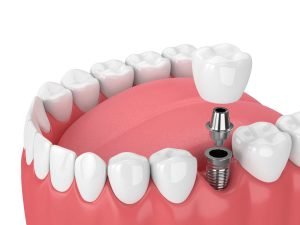
Dental implants are a revolutionary solution for replacing missing teeth, offering a permanent and natural-looking alternative to dentures and bridges. As a long-term prosthetic, a dental implant acts as a prosthetic tooth root that prevents bone resorption (jawbone shrinkage) and restores 100% of your natural biting force. At Centrasota Dental, we specialize in providing top-quality dental implants that restore both the function and appearance of your smile. Dental implants consist of three distinct components: a medical-grade titanium post placed into the jawbone, a connector known as an abutment, and a custom-made porcelain crown that is meticulously color-matched to your natural teeth for a seamless finish.
Our Tooth Replacement Solutions
Single Tooth Implant Replacement
If you are missing one tooth, a single implant is the most effective solution available in modern dentistry. Unlike a traditional dental bridge, a single tooth implant does not require the grinding down or “prepping” of adjacent healthy teeth. This preserves your natural tooth structure while the implant post stimulates the bone in the empty socket, maintaining your facial structure.
Multiple Tooth & Full-Arch Restorations
For patients missing several teeth or an entire row, we offer implant-supported bridges and All-on-4® full-arch restorations. Instead of a single implant for every missing tooth, we can strategically place as few as four implants to support a permanent, non-removable bridge. This provides superior stability, eliminates the “clicking” of dentures, and allows you to eat a full range of foods without restriction.
Specialized Implant Materials: Titanium vs. Zirconia
Choosing the right material is essential for long-term success. Most dental implants are made of medical-grade Titanium because of its incredible biocompatibility—a unique ability to fuse with human bone. For patients with specific metal sensitivities or those who prefer a metal-free, holistic approach, we offer Zirconia (ceramic) implants. Zirconia is naturally white, highly aesthetic, and resistant to the buildup of plaque and bacteria around the gum line.
Comparing Your Restoration Options
| Feature | Dental Implants | Dental Bridges | Traditional Dentures |
| Lifespan | 25+ Years / Lifetime | 5-15 Years | 5-10 Years |
| Bone Health | Prevents Bone Loss | Bone continues to recede | Bone continues to recede |
| Adjacent Teeth | No impact on healthy teeth | Requires crowning neighbors | Can weaken neighbors |
| Stability | Permanent / No slipping | >Fixed | May slip or click |
| Maintenance | Brush/Floss like natural | Special flossing required | Daily removal/soaking |
The Step-by-Step Implant Process
We believe in a “safety-first” approach, utilizing advanced technology to ensure your procedure is precise and predictable.
Step 1: Consultation & 3D Digital Mapping: We evaluate your oral health using 3D Cone Beam CT imaging. This allows Dr. Congdon to visualize your bone structure, nerve pathways, and sinus cavities in three dimensions to plan the exact angle of placement.
Step 2: Pre-operative Preparation: Prior to surgery, we may recommend a professional cleaning or, if bone loss is an issue, a bone grafting procedure. This ensures your jaw has the necessary volume to “lock” the implant in place.
Step 3: Surgical Placement: The implant post is surgically placed into the jawbone. To ensure a stress-free experience, we prioritize patient comfort with local anesthesia or customized sedation dentistry options.
Step 4: Osseointegration (Healing): Over the next 3 to 6 months, a biological process called osseointegration occurs. Your jawbone grows around and fuses to the titanium post, making it a permanent part of your anatomy.
Step 5: Final Restoration: Once the site is healed, we attach the abutment and your custom-crafted crown. This is the moment your smile is fully restored to its natural beauty and strength.
Caring for Your Dental Implants
While dental implants cannot get cavities, they require diligent care to prevent gum disease (peri-implantitis), which can lead to implant failure.
Daily Oral Hygiene: Brush and floss your implants exactly as you do your natural teeth. We recommend using a soft-bristled toothbrush and non-abrasive toothpaste to protect the porcelain restoration.
Specialized Tools: In some cases, we may suggest interdental brushes or water flossers to clean hard-to-reach areas around implant-supported bridges.
Avoid Hard Habits: Avoid biting into non-food items like pens or ice. While implants are strong, the porcelain crown can chip under extreme pressure.
Professional Monitoring: Regular checkups at Centrasota Dental are vital. We use specialized instruments to clean around the implants without scratching the metal or ceramic surfaces.
Cost and Insurance Information
Understanding the investment is a key part of your decision-making process.
Cost Factors: The total cost of your dental implant depends on several factors: the number of teeth being replaced, the type of restoration (crown vs. bridge), and whether pre-op prep like bone grafting or sinus lifts are required.
Insurance Coverage: Dental insurance coverage for implants varies widely. While some plans cover the entire procedure, others may only cover the restoration (the crown) rather than the surgical placement.
Affordability: At Centrasota Dental, we provide a detailed, transparent estimate after your initial consultation. We also explore third-party financing options to ensure your dental health fits within your budget.
Dental Implant FAQs
General Knowledge & Aesthetics
What are dental implants, and how do they work?
Dental implants are artificial tooth roots placed into your jaw to hold a replacement tooth or bridge. They work by utilizing a biological process called osseointegration, where the medical-grade titanium of the implant post actually fuses with your living jawbone. This creates a rock-solid, permanent foundation that doesn’t slip, shift, or click like traditional dentures. By mimicking the structure of a natural tooth root, the implant provides the necessary stimulation to the bone to keep it healthy and strong.
Do dental implants look and feel natural?
Yes. Because they are anchored in the bone rather than resting on top of the gums, they emerge from the gum line just like natural teeth. At Centrasota Dental, we take great care to match the shade, translucency, and anatomical shape of the custom porcelain crown to your surrounding natural teeth. Most patients find that once the healing process is complete, they cannot distinguish the implant from their original teeth in terms of biting sensation, speech, or appearance.
What is the success rate of dental implants?
The success rate of dental implants is remarkably high, typically between 95% and 98% for healthy patients. At Centrasota Dental, our success rates are bolstered by our use of advanced 3D diagnostic technology and the specialized expertise of a Prosthodontist. Long-term success depends largely on the patient’s commitment to oral hygiene and regular professional cleanings to ensure the gums around the implant remain free of infection.
Can dental implants replace multiple missing teeth?
Absolutely. Dental implants are highly versatile; we don’t always need a 1:1 ratio of implants to teeth. For example, we can use two implants to support a fixed bridge for 3-4 missing teeth in a row. For patients missing an entire upper or lower arch, we offer full-arch solutions like All-on-4®, which uses strategically angled implants to support a complete set of permanent teeth, restoring your smile without the need for individual implants for every tooth.
Can dental implants prevent bone loss?
Yes. When a natural tooth is lost, the jawbone beneath it begins to dissolve because it no longer receives stimulation from chewing forces. This can lead to a sunken facial appearance over time. Implants are the only tooth replacement option that stimulates and preserves natural bone. By acting as a prosthetic root, the implant signals the body to continue sending minerals to that area of the jaw, effectively stopping bone resorption in its tracks.
How do they affect the jawbone?
They prevent “facial collapse” by maintaining the density of the jawbone, which keeps your facial features from looking aged or sunken. Beyond just aesthetics, this preservation of the jawbone protects the stability of your remaining natural teeth. When bone is lost, adjacent teeth can begin to tilt or shift; dental implants prevent this domino effect, ensuring your entire bite remains aligned and functionally sound for years to come.
Candidacy & Risks
Am I a candidate for dental implants? / Who is a good candidate?
Most healthy adults are excellent candidates for this procedure. We look for adequate bone density to support the post and healthy gum tissue that is free of periodontal disease. While certain health conditions like uncontrolled diabetes or autoimmune disorders can impact healing, they do not necessarily disqualify you. Dr. Congdon will perform a comprehensive medical review during your consultation to build a customized plan that ensures the highest safety standards for your specific health profile.
Can I get implants if I have bone loss?
Yes. Bone loss issues are common, especially if a tooth has been missing for a long period. We can often perform bone grafting or a sinus lift to “bulk up” the treatment area and create a sturdy foundation before placement. With modern regenerative techniques, even patients who were told years ago that they weren’t candidates can now successfully receive dental implants and enjoy a restored smile.
What are the risks of smoking with dental implants?
Smoking risks are one of the leading causes of implant failure. Nicotine is a vasoconstrictor, meaning it constricts blood flow to the gums and bone, which significantly slows the body’s ability to heal and fuse the bone to the implant. Smoking also increases the risk of infection (peri-implantitis) during the recovery phase. We strongly recommend that patients stop smoking at least two weeks before surgery and throughout the entire 3–6 month osseointegration period.
Can my body reject a dental implant?
Titanium is highly biocompatible, meaning the human body does not typically recognize it as a foreign “threat” in the same way it might with an organ transplant. Therefore, “rejection” in the traditional sense is extremely rare. Most “implant failures” are actually caused by local factors such as tobacco use, poor oral hygiene leading to infection, or insufficient bone density at the time of placement—all of which we work to prevent through rigorous planning.
Are there any risks or complications with dental implants?
Minor risks include infection at the surgical site, minor nerve damage, or sinus issues if implants in the upper jaw protrude into the sinus cavities. However, at Centrasota Dental, we utilize 3D Cone Beam CT mapping technology to visualize your internal anatomy with sub-millimeter precision. This allows us to avoid nerves and sinuses entirely, making the risk of complications exceptionally low compared to traditional “blind” surgical methods.
The Procedure & Recovery
Is getting dental implants painful?
The procedure itself is typically painless because we use local anesthesia to completely numb the area; many patients also opt for sedation dentistry to remain completely relaxed. Most of our patients describe the post-operative recovery as being milder than a standard tooth extraction. Any soreness or swelling in the days following surgery is usually well-managed with over-the-counter pain relievers and following our detailed post-op care instructions.
How long does the surgery itself take?
Placement of a single dental implant usually takes between 30 to 60 minutes. The duration is highly efficient because of our extensive pre-operative planning. If you are receiving multiple implants or a full-arch restoration, the procedure may take 2 to 3 hours. We will provide you with a specific time estimate during your consultation so you can plan your day accordingly.
How long does the healing process take?
Total healing, or osseointegration, typically takes 3 to 6 months. During this time, your bone is biologically “welding” itself to the implant post. While this may sound like a long time, you are usually not without a tooth during this phase; we can often provide a temporary restoration so that you can smile and eat soft foods confidently while the permanent foundation is being built by your body.
What is the "one-day procedure" (Teeth in a Day)?
For qualifying patients, we can provide “Immediate Load” implants where the titanium post and a temporary aesthetic crown are placed in a single visit. This means you walk into our office with a missing tooth and walk out with a functional, beautiful temporary tooth the same day. Once the implant is fully fused to the bone a few months later, we swap the temporary for your permanent, high-strength porcelain restoration.
What is the difference between mini implants and traditional ones?
Mini dental implants (MDIs) are narrower in diameter (roughly the size of a toothpick) and are often used for patients with limited bone density who cannot undergo grafting. While traditional implants are the “gold standard” for replacing individual teeth due to their strength, mini implants are excellent for stabilizing lower dentures to prevent them from slipping while talking or eating.
What is the Step-by-Step Process for dental implants?
The journey involves four main phases: First, a comprehensive consultation with 3D imaging. Second, the surgical placement of the titanium post. Third, a healing period of several months to allow for osseointegration. Finally, the restorative phase where we attach the abutment and your custom-crafted crown. Each step is meticulously monitored by Dr. Congdon to ensure the final result is both beautiful and functional.
What is involved in Pre-op Prep?
Pre-operative preparation is vital for a sterile and successful surgery. This involves a full review of your medical history, 3D imaging to map the bone, and potentially treating any existing gum disease or decay in neighboring teeth. We may also prescribe a round of antibiotics or an antibacterial mouthwash to use leading up to your appointment to minimize the risk of infection and ensure the best possible environment for healing.
What is involved in Post-op Care?
Immediately following surgery, you will be on a soft-food diet for a few days to avoid putting pressure on the new implant. You will need to keep the site clean using a gentle saltwater rinse and avoid using straws, as the suction can disturb the surgical site. Long-term care involves the same diligent brushing and flossing routine you use for natural teeth, along with regular checkups at Centrasota Dental.
Is the procedure duration long?
While the entire “process” from start to finish takes several months due to the bone’s natural healing speed, your time in the dental chair is relatively short. Modern implant surgery is a highly refined, outpatient procedure. Most patients are surprised by how quickly the actual placement is finished and how soon they can return to their normal daily activities—often the very next day.
Maintenance & Lifestyle
How long do dental implants last?
With proper care and regular professional maintenance, the titanium implant post is a permanent, lifetime solution. While the porcelain crown on top is subject to normal wear and tear and may eventually need replacement after 10–15 years (similar to a standard dental crown), the “root” of the implant is intended to stay with you for the rest of your life.
What foods should I avoid with dental implants?
Once the implant is fully healed and the permanent crown is placed, you can eat almost anything, including steaks and apples. However, we advise all patients to avoid biting into excessively hard items like ice cubes, unpopped popcorn kernels, or hard candies. These habits can chip or crack the porcelain restoration, just as they can damage your natural teeth.
How do I care for dental implants?
Caring for implants is simple: Brush twice a day with a soft toothbrush and floss daily. Because there are no “moving parts,” they don’t require the messy adhesives or soaking solutions that dentures do. Regular professional cleanings at Centrasota Dental are essential, as we use specialized tools to clean around the implant without scratching the surface, ensuring the surrounding gums stay healthy.
Can I get a cavity in a dental implant?
No, the materials used in dental implants (titanium and porcelain) are immune to tooth decay. However, it is a common misconception that you don’t need to brush them. The gum tissue and bone surrounding the implant can still be affected by bacteria and gum disease. Maintaining excellent hygiene is critical to prevent “peri-implantitis,” which is an infection that can cause the bone to pull away from the implant.
Choosing a Provider & Cost
How much do dental implants cost?
The cost of dental implants varies based on the complexity of your case, the number of teeth being replaced, and whether you require pre-op prep like bone grafting. While the upfront cost is higher than a bridge or denture, implants are often more cost-effective over a lifetime because they don’t require the frequent replacements or adjustments that other methods do. We provide a full transparent breakdown of all fees during your initial consultation.
Are dental implants covered by insurance?
Insurance coverage for implants has improved significantly in recent years. Many plans now offer partial coverage for either the surgical placement or the final restoration. Our administrative team at Centrasota Dental will work closely with your provider to maximize your benefits and help you navigate the documentation process. We also offer flexible financing options to help make this life-changing treatment fit your monthly budget.
Why choose an implant specialist like a Prosthodontist?
A Prosthodontist is a dentist who has completed three years of additional, advanced residency training beyond dental school specifically in the restoration and replacement of teeth. This makes Dr. Congdon an expert in the “engineering” of your smile. Choosing a specialist ensures that your implant isn’t just placed, but is placed with the highest level of precision for long-term health and the most natural-looking aesthetic possible.
Does Centrasota Dental use the latest technology?
Yes, we utilize Cone Beam 3D imaging (CBCT) to create a digital roadmap of your jaw. This eliminates guesswork and allows for “guided surgery,” where the implant is placed in the precise location for maximum bone support. We also use digital impressions, which are more accurate and comfortable for the patient than the old-fashioned “goop” molds.
What if my implant fails?
If an implant fails to fuse with the bone (which happens in less than 5% of cases), it is usually not a permanent loss. We can often remove the failing implant, allow the area to heal for a few months (sometimes with a small bone graft), and then place a new implant with a very high success rate. Early detection of any issues is key, which is why we monitor your healing so closely.
What is the first step to getting dental implants?
The first step is to contact Centrasota Dental for a comprehensive consultation! During this visit, we will listen to your goals, perform a 3D scan, and provide you with a clear, step-by-step treatment plan. We believe in empowering our St. Cloud patients with information so they can make the best decision for their health and confidence.
Patient Success Stories
“Dr. Congdon has been my dentist since I moved to St Cloud 14 years ago. This speaks volume about the care, the professionalism, and the sense of friendship Centrasota Dental extends to their patients. Simply the best!” – Mumbi Mwangi
“Centrasota Dental went above and beyond making me feel comfortable… I am over the moon about my experience. I would recommend this place to anyone!” – Lia Ramirez
“Efficient, precise and friendly sums up the staff. Thanks for making an experience I don’t care for a good experience.” – Dina Hengel Vollan
“The best dentist and staff I have worked with! Dr. Congdon came in on his day off at 6:45am so that way I could be ready for work at 8:00am!! 5 stars” – Trish Caird
“Dr. Congdon is an exemplary dentist. The staff is wonderful, too. Centrasota Dental is simply ‘best in class.'” – Gary Kunstal
Choosing a Prosthodontist in St. Cloud
When it comes to dental implants, the skill of the surgeon and restorative dentist is the most significant factor in long-term success. As a Prosthodontist, Dr. Robert Congdon is a specialist in the restoration and replacement of teeth, having completed three years of additional residency training beyond dental school. This expertise ensures that your implants are not only biologically successful but also aesthetically beautiful and functionally perfect.