

Dental Bridges
Missing teeth can significantly impact your oral health, functionality, and appearance. At Centrasota Dental, we offer dental bridges as an effective solution to restore your smile and improve your overall dental health. Dental bridges are designed to fill the gaps left by missing teeth, providing both functional and aesthetic benefits.
What are Dental Bridges?
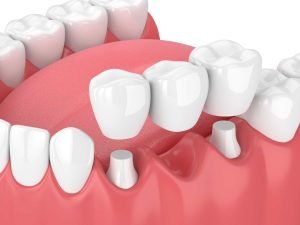
A dental bridge is a fixed dental prosthesis used to replace one or more missing teeth by anchoring to the adjacent natural teeth or dental implants. The bridge consists of one or more artificial teeth, known as pontics, which are held in place by crowns attached to the surrounding teeth. This creates a seamless appearance and restores the natural function of your teeth.
Types of Dental Bridges
There are several types of dental bridges available, each suited to different dental needs and preferences. The most common types include:
Traditional Bridges: Traditional bridges involve creating a crown for the tooth or implant on either side of the missing tooth, with a pontic in between. They are the most commonly used type of bridge and are suitable for patients with natural teeth on both sides of the gap.
Cantilever Bridges: These bridges are used when there is an adjacent tooth on only one side of the missing tooth or teeth. Cantilever bridges are less common and typically used in areas of the mouth that are under less stress.
Maryland Bridges: Also known as resin-bonded bridges, Maryland bridges use a metal or porcelain framework bonded to the back of the adjacent teeth. This type of bridge is less invasive as it does not require the adjacent teeth to be crowned.
Implant-Supported Bridges: These bridges are supported by dental implants rather than natural teeth. They are an excellent option for patients who have multiple missing teeth and want a durable and long-lasting solution.
The Dental Bridge Procedure
The process of getting a dental bridge typically involves multiple visits. During the initial consultation, Dr. Congdon will examine your mouth and take X-rays to determine the best type of bridge for your situation. If necessary, the adjacent teeth will be prepared by removing a portion of the enamel to make room for the crowns.
Next, impressions of your teeth are taken to create a custom bridge that fits perfectly. A temporary bridge may be placed to protect the prepared teeth and gums while your permanent bridge is being made. In your subsequent visit, the temporary bridge is removed, and the new bridge is checked for fit and comfort. Once the bridge is adjusted to ensure a proper fit, it is permanently cemented in place.
Benefits of Dental Bridges
Dental bridges offer numerous benefits. They restore the ability to chew and speak properly, which can be affected by missing teeth. Bridges also help maintain the shape of your face and prevent the remaining teeth from shifting out of position. Additionally, dental bridges can improve your smile’s appearance, boosting your confidence and self-esteem.
Aftercare for Dental Bridges
Proper care is essential to ensure the longevity of your dental bridge. Maintain good oral hygiene by brushing twice a day and flossing daily to prevent decay and gum disease. It’s important to clean under the pontic using a special floss or an interdental brush to remove food particles and plaque. Avoid chewing on hard objects like ice or pens, which can damage the bridge. Regular dental checkups are crucial to monitor the health of your bridge and surrounding teeth. During these visits, we will examine the condition of your bridge and provide any necessary maintenance.
Contact Us
If you have any questions about dental bridges or wish to schedule a consultation, please contact Centrasota Dental. Our team is dedicated to providing high-quality dental care and helping you achieve a healthy, beautiful smile.
Dental Bridges Questions
What is a dental bridge, and how does it work?
How long do dental bridges last?
What are the different types of dental bridges?
Traditional Bridges: These involve creating crowns for the teeth on both sides of the gap. This is the most common type and provides a sturdy, reliable solution for patients with healthy teeth adjacent to the missing ones.
Cantilever Bridges: Used when there is only one adjacent tooth on one side of the missing tooth. Cantilever bridges are typically suited for areas with less chewing pressure.
Maryland Bridges: Also called resin-bonded bridges, these use a framework attached to the back of the adjacent teeth. They are less invasive but usually best for front teeth where there’s less biting force.
Implant-Supported Bridges: These are supported by dental implants rather than natural teeth, providing a durable solution for patients with multiple missing teeth in a row.